
The Only Things You Need to Prepare — A Month-by-Month Guide for the Non-Pregnant Partner
Your partner is pregnant. Maybe you're excited. Maybe you're terrified. Maybe you're both at once.
Here's what nobody's telling you: this is going to change your life just as much as it changes theirs. But while your partner is getting bombarded with pregnancy apps, doctor's appointments, and everyone asking how they're feeling — you're kind of just... there. Expected to be supportive. Expected to know what to do. Expected to have your sh*t together while also processing that you're about to become a parent.
Everyone assumes the non-pregnant partner will just figure it out. But you need guidance too. You just haven't been given any.
This is the Need-to-Know philosophy: the right information at the right time — not everything dumped on you at once. A friend who had a premature baby once said: "Why worry twice? Worrying now won't stop the future from happening." That's the whole idea. So here's what actually deserves your attention, month by month.
Months 1–2 (Weeks 4–8): Understand What's Actually Happening
Your partner called the OB excited and nervous and maybe terrified — and the response was "great, see you at 8–10 weeks." And now you're both just... waiting? With no guidance?
This is one of the most disorienting parts of early pregnancy. And it's disorienting for you too.
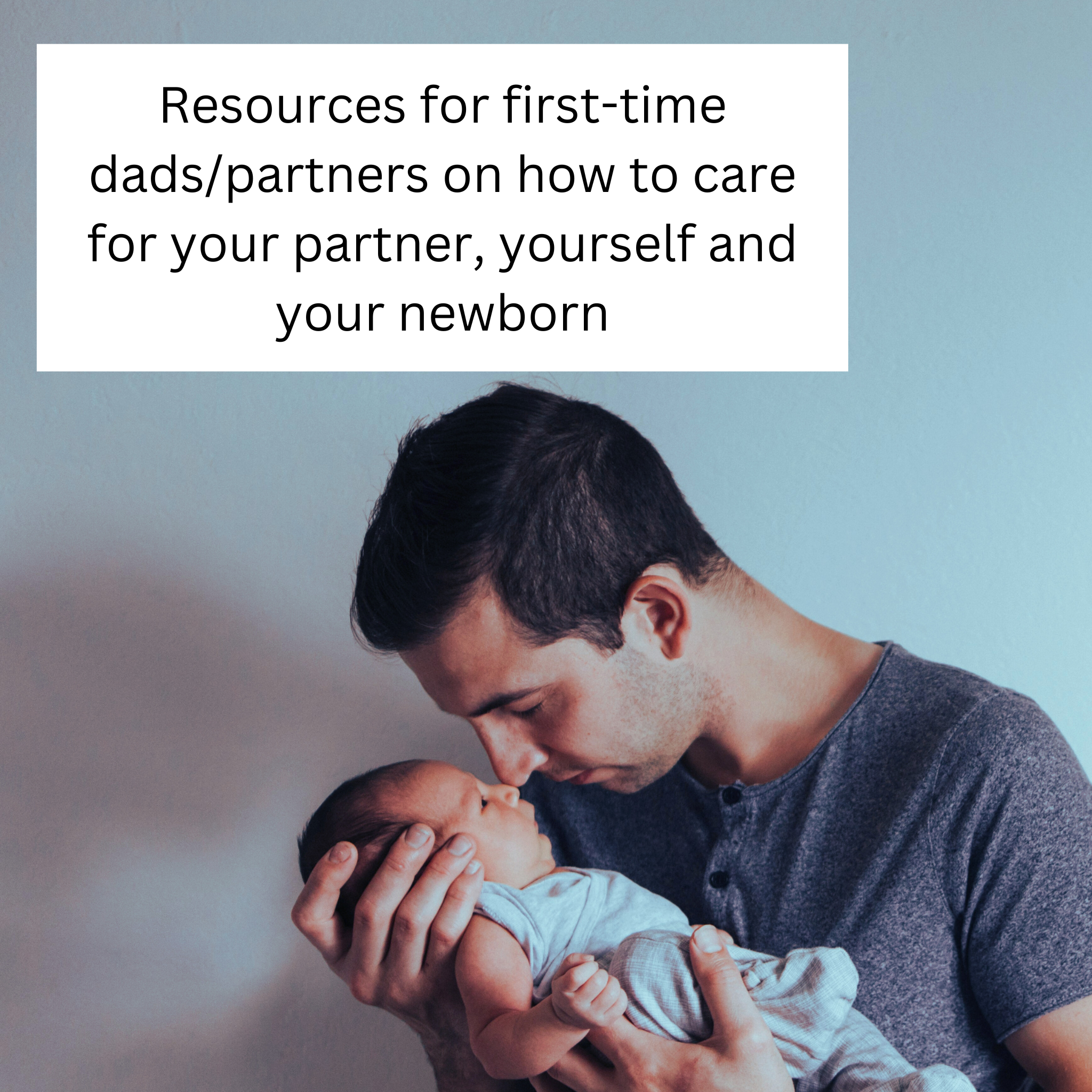
All the answers you need as a first-time parent — none of the noise, overwhelm, or 2 AM panic searches. We'll cover everything from how to show up for your partner during pregnancy, what is actually going on in their body, the conversations and date nights you should be having, and all the baby-care support you need to get through those first two months with your newborn.
Here's what's actually going on with your partner right now: their hormones are surging in ways that are hard to overstate, their blood volume is increasing, and they're building an entirely new organ. The fatigue might be unlike anything they've experienced. The nausea might be all-day, not just morning. And they're probably not telling you the full extent of it — because they don't want to complain, or they're trying to act normal at work, or they're not sure you'll understand.
What you need to do right now:
Believe them when they say they feel terrible. Don't minimize it, don't compare it to other things. Just: "That sounds really hard. What do you need?"
Take things off their plate without being asked. Do the dishes. Make dinner. Clean the bathroom. Don't ask "what can I do to help?" — that makes them manage you. Just notice what needs doing and do it.
Start building your own support system. You need people you can talk to — friends who are also parents, people who get it. You have your own processing to do. Start identifying those people now.
Skip for now: buying anything, researching anything, decorating anything. None of that is your job yet.
Months 2–3 (Weeks 9–12): Have the Important Conversations
The noise is starting — ads, advice, family members with opinions. Tune it out. The only things that matter right now are people, conversations, and a few important decisions.
Have the values conversation. What kind of parents do you want to be? Where do your approaches differ from how you were raised? What do you want to keep, and what do you want to do differently? This conversation goes much better now than when you're sleep-deprived and in crisis.
Find your own therapist. Partners get prenatal anxiety and postpartum depression too. Nobody talks about it, but it's real. Get support in place before you need it urgently.
If you are even considering daycare, get on the waitlists now. All of them. Infant care waitlists in many areas run 12+ months. You do not need to have made a final decision — you can always say no when a spot opens. But you cannot get a spot that doesn't exist. This is one of the few things where early action genuinely matters.
Skip for now: gear, registry, birth plans. Not yet.
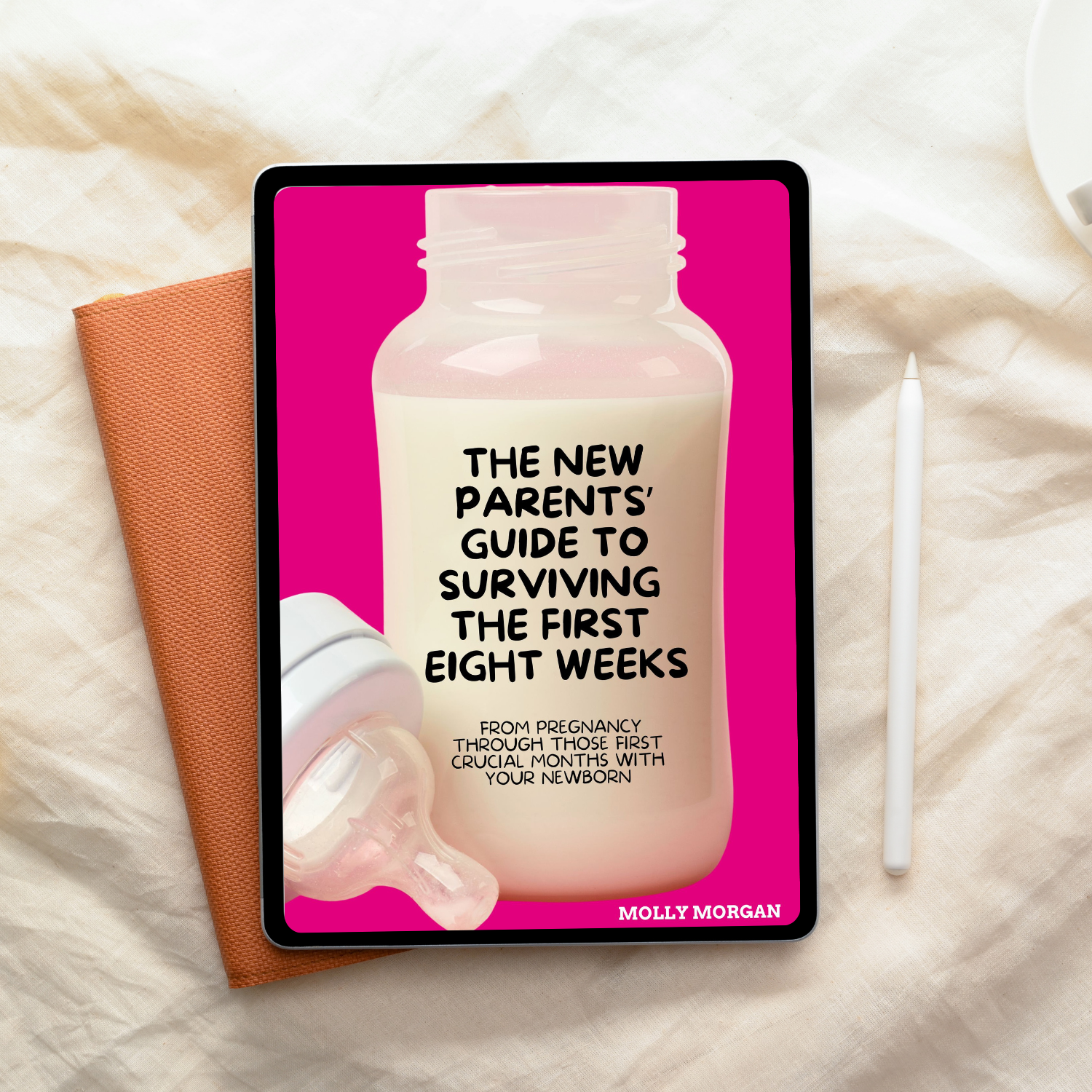
The book that tells you what actually matters — and gives you permission to ignore everything else. The course delivers your guidance when you need it. The book gives you the full picture whenever you want it. Some people like having both — to read ahead, to hand to a partner who isn't on the course, or just to have something to hold.
Instant access to the bestselling guide for first-time parents covering pregnancy, the newborn stage, and everything in between. No fear-mongering, no information overload. Just honest, practical support from a mom who has been through it.
This listing is for the digital download. You'll receive access immediately after purchase. Prefer a paperback? Grab it on Amazon.
Months 3–4 (Weeks 13–16): Money and Division of Labor
Your partner may actually feel human again. Use this window. The conversations you need to have aren't about nursery themes — they're about finances and who is doing what around here.
Have the money conversation. Look at the real numbers: parental leave policies, medical costs, childcare estimates, what happens if one income pauses. This is awkward. Have it anyway. You have more control than you think, but only if you actually look at the math together.
Start talking about division of labor — now. Here's the thing: your partner is currently doing their normal life plus building a human. That's their contribution to the household right now. If you're still doing what you normally do and nothing more, you're not pulling your weight. The patterns you have now will intensify exponentially when a baby is added to the mix. Fix them now, while you can think straight.
Understand the difference between tasks and mental load. Doing the laundry is a task. Noticing the hamper is full, checking if there's detergent, remembering to move it to the dryer — that's mental load. If your partner is the default manager of the household and you're the helper who needs to be told what to do, that's not a partnership. Take ownership of entire projects. Stop asking "should I...?" and start just doing.
Months 4–5 (Weeks 17–20): The Registry — With Perspective
This is often the best stretch of pregnancy — more energy, visible bump, maybe the first flutters of movement. The baby industry is going to get very loud about what you "need." Here's the reality: babies need food, a safe place to sleep, diapers, and to be held. Everything else is optional.
Approach the registry as a "less is more" project. Don't buy before the baby arrives what you could get in two days if you discover you actually need it. You can always buy more. You cannot un-buy things you wasted money on. Lead with safety, not aesthetics.
Plan the baby shower if you want one. Your partner feels good right now. This is the window.
Keep taking on more of the household. Your partner's energy will dip again in the third trimester. The patterns you're building now matter.
Skip for now: hospital bag, postpartum prep, birth plan. That's all still weeks away.
Months 5–7 (Weeks 21–31): The Big Practical Questions
This is when to tackle the decisions that require research, not purchases. And it's when something important is also happening to you — whether you realize it yet or not.
Finalize childcare research and confirm your waitlist status. If you got on lists in months 2–3, follow up. If you haven't gotten on lists yet, do it now. Research options fully — daycare centers, nanny shares, family care — and understand the real costs. In many cities, infant care runs $1,500–3,000+ per month. Do the math with your actual numbers.
Nail down return-to-work plans. Are you both going back? Is part-time possible? Who handles it when the baby is sick and can't go to daycare? These decisions are much easier to make now than in the fog of new parenthood.
Prepare for your own identity shift. There's a word for what's about to happen to you: patrescence. It's the partner's version of matrescence, and almost nobody talks about it. When you become a parent, your brain physically restructures — the areas responsible for empathy, attachment, caregiving, and problem-solving all develop new neural pathways. This happens regardless of biology. You're not going to be the same person. That's not a loss. But it helps to know it's coming and to give yourself room to grieve your old life while welcoming who you're becoming.

All the answers you need as a first-time parent — none of the noise, overwhelm, or 2 AM panic searches. We'll cover everything from what is actually going on in your body, how to navigate pregnancy with your sanity intact, the conversations and date nights you should be having with your partner, and all the baby-care support you need to get through those first two months with your newborn.
Month 8 (Weeks 32–36): Now Things Get Real
This is the hardest physical stage of pregnancy. Your partner is uncomfortable constantly, anxious about labor, exhausted but can't sleep. They need you to step up without being asked. Here's where your energy goes:
Learn what birth actually looks like — the realistic version. Your job in the delivery room is to advocate for your partner's wishes, keep them informed before decisions are made, help them feel safe, and stay calm even when things get intense. Labor rarely goes according to plan. A simple, values-based birth plan (one page) is more useful than a detailed list of preferences that may be out the window within an hour.
Pack both hospital bags. Yours and your partner's. Include snacks and something to do during early labor — it can be slow. Install the car seat now, not the day you're leaving the hospital.
Set visitor boundaries as a team — and be the one who enforces them. Your partner should not have to manage this while recovering from birth. Decide together who visits and when, how long they stay, and what you actually need from people (real help, not just baby-holding). Then you handle it. Your job is to protect your family, even when it's uncomfortable, even when people push back.
On the nursery: The baby will sleep in your room for the first several months — safe sleep guidelines recommend room-sharing until at least six months. So the nursery isn't the priority it feels like. If setting up a basic version brings your partner peace, support that. But function over perfection: what you actually need ready is a bassinet in your room and a changing station. The nursery can be finished after the baby arrives.
On food prep: Stock the house like you're preparing for two weeks where nobody leaves. But don't go overboard on freezer meals — you'll make a bunch of things and then not want to eat them because postpartum cravings don't follow a plan made three months ago. A few favorites plus one-handed snacks (protein bars, hard-boiled eggs, things you can eat while holding a baby) is the actual goal.
Month 9 (Weeks 37–40): Stop Preparing and Start Being Present
You've done what you needed to do. Now the work is staying in the moment.
Check in on your own mental health. Fear is appropriate right now — you're about to do something enormous. But if the anxiety is overwhelming, talk to someone. Partners experience prenatal anxiety too, and this is the right time to address it.
Spend time with your partner. Go on dates. Have quiet evenings. Be together in the way you won't be able to once a baby is in the mix, at least for a while.
Trust that you will figure it out. Not because you researched everything, but because you showed up, you paid attention, and you're going to keep adapting. That's what actually makes a good parent.
The Whole Point
You are not a helper. You're not a secondary parent. You're a co-parent, and that starts now — not when the baby arrives.
That's exactly what the Need-to-Know course is built around: week-by-week guidance that arrives when it's actually relevant, so you're prepared without being overwhelmed. If you want to stop drowning in information and start getting just what you need, when you need it —join us here.
Featured Products
The book that tells you what actually matters — and gives you permission to ignore everything else. The course delivers your guidance when you need it. The book gives you the full picture whenever you want it. Some people like having both — to read ahead, to hand to a partner who isn't on the course, or just to have something to hold.
Instant access to the bestselling guide for first-time parents covering pregnancy, the newborn stage, and everything in between. No fear-mongering, no information overload. Just honest, practical support from a mom who has been through it.
This listing is for the digital download. You'll receive access immediately after purchase. Prefer a paperback? Grab it on Amazon.
All the answers you need as a first-time parent — none of the noise, overwhelm, or 2 AM panic searches. We'll cover everything from what is actually going on in your body, how to navigate pregnancy with your sanity intact, the conversations and date nights you should be having with your partner, and all the baby-care support you need to get through those first two months with your newborn.
All the answers you need as a first-time parent — none of the noise, overwhelm, or 2 AM panic searches. We'll cover everything from how to show up for your partner during pregnancy, what is actually going on in their body, the conversations and date nights you should be having, and all the baby-care support you need to get through those first two months with your newborn.