
How to Write a Birth Plan That Actually Helps You (And What Most People Get Wrong)
If you've been pregnant for more than five minutes, you've probably already encountered the birth plan industrial complex. The elaborate templates. The multi-page documents covering lighting preferences, music choices, which positions you'd like to try, who can speak to you and when, and the precise sequence in which you'd like various interventions offered or declined.
All of it written as if birth is an event you can choreograph in advance.
Here's what I want you to know before you spend hours filling out a twelve-page document: birth never goes according to plan. Labor will go however labor goes, and no amount of planning can change that. The overemphasis on birth plans puts a lot of expecting parents in a position to feel like they failed when their birth doesn't unfold the way they envisioned — which, for most people, it won't.
That doesn't mean you shouldn't write one. It means you need to understand what a birth plan is actually for.
What a Birth Plan Is Not
A birth plan is not a wish list for your ideal birth experience. It is not a contract with your medical team. It is not a way to control what happens in the delivery room.
Labor is unpredictable by nature. Babies don't follow scripts. Bodies surprise everyone, including experienced OBs. A plan written months in advance about the specific details of an event nobody can predict is not going to hold up under the reality of actual labor.
And more importantly: when you hold a birth plan too tightly — when you've built your sense of success around hitting specific moments exactly as you imagined them — what you've set yourself up for is grief when things go differently. And things almost always go at least a little differently.
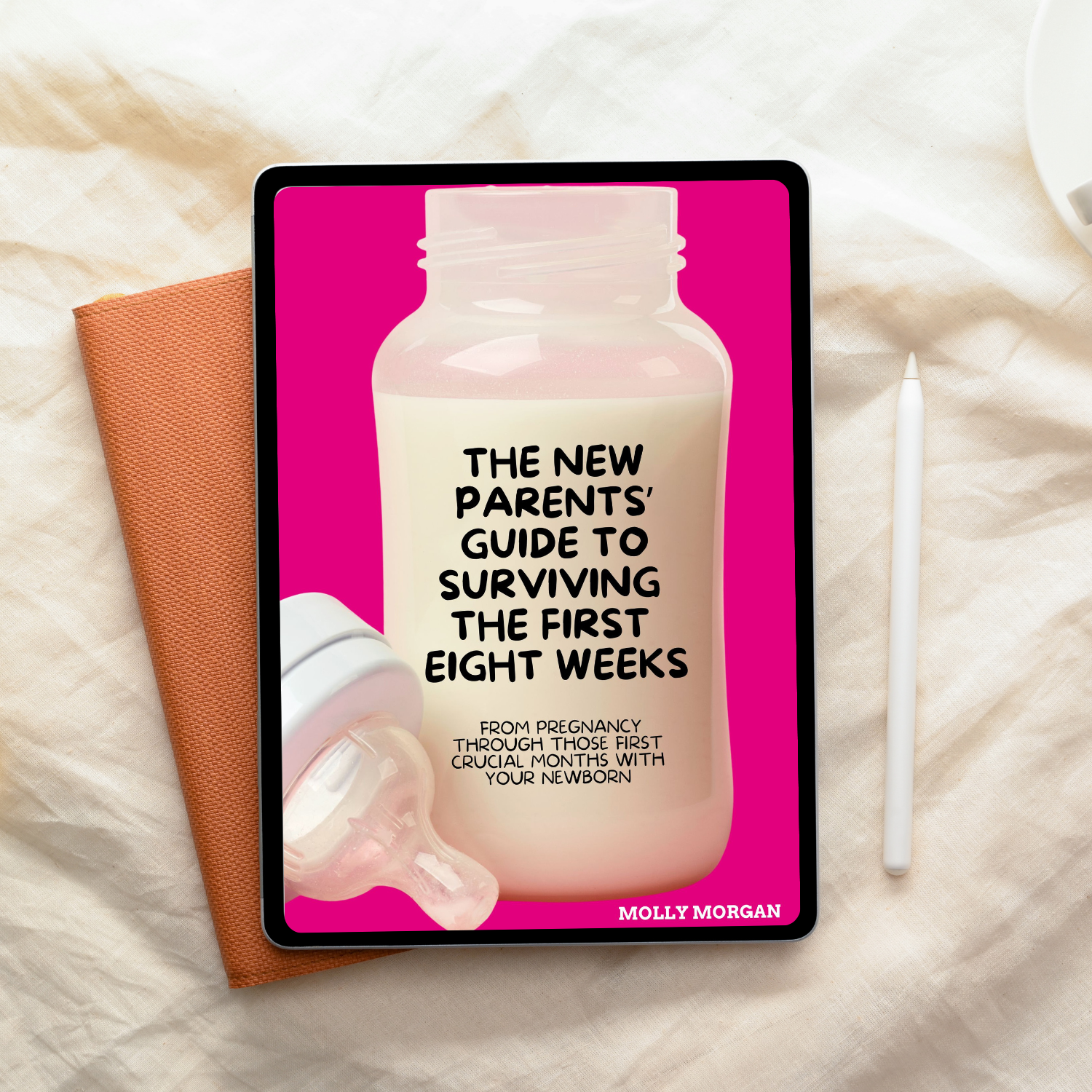
The book that tells you what actually matters — and gives you permission to ignore everything else. The course delivers your guidance when you need it. The book gives you the full picture whenever you want it. Some people like having both — to read ahead, to hand to a partner who isn't on the course, or just to have something to hold.
Instant access to the bestselling guide for first-time parents covering pregnancy, the newborn stage, and everything in between. No fear-mongering, no information overload. Just honest, practical support from a mom who has been through it.
This listing is for the digital download. You'll receive access immediately after purchase. Prefer a paperback? Grab it on Amazon.
What a Birth Plan Actually Is
A birth plan is a place to communicate what support you need and how you want to be treated.
That's it. That reframe changes everything.
It's not about the procedures. It's about the people — how you want the medical team to interact with you, what matters most to you in terms of how decisions get made, and what your baseline needs are as a human being going through something enormous.
I made my birth plan with my therapist. My question to her was: from your perspective, what do women typically overlook in birth planning? Her answer was immediate: most women who hold their birth plans too tightly end up disheartened when birth inevitably gets complicated. The goal, she told me, wasn't to script my birth — it was to prepare for what was in my control and trust the people around me when the time came.
That reorientation changed how I approached the whole thing.
What to Actually Include
Here's the framework that actually matters. Keep it to one page. Anything more than one page is unlikely to be read in full by a busy labor and delivery team, and the more you write, the more you've left to feel disappointed about.
Your top priorities. What matters most to you? Healthy mom and baby? Feeling informed before decisions are made? Managing pain effectively? Being treated with kindness rather than clinical efficiency? These don't have to be elaborate — they just need to be honest.
How you want to be treated. This is the piece most people skip entirely, and it's the one that will probably affect your experience more than anything else. Do you want things explained to you before they happen? Do you want gentleness over directness? Do you need time to process before decisions are made, or do you prefer people to just tell you what needs to happen and do it? Your medical team are professionals — but they can't know your preferences unless you tell them.
Here's what I put in mine: I prefer gentleness and kindness over being prescriptive or getting tough love. If a procedure or change needs to happen, I would like to understand why the choices are being made and to understand my options.
Simple. But it shaped every interaction I had with the staff in a way that mattered to me.
Your thoughts on pain management. This is important to name clearly, because it's also where a lot of people encounter pressure they didn't expect. Pain management during birth is a decision made by the person in pain — full stop. Your baby will be perfectly healthy whether you manage pain with medication or without. This is about what youneed, not what anyone else thinks you should want.
It's also worth knowing that managing pain effectively can sometimes help you avoid interventions later — if you're less exhausted when it's time to push, you may have more strength for delivery. So whatever your preference is, own it without apology.
State clearly whether you want all forms of pain management offered to you, whether you plan to get an epidural, whether you want to wait and see, or whether you intend to go unmedicated. And make sure your partner knows how to advocate for those wishes if you're not in a position to advocate for yourself in the moment.
Your feeding intentions. State this clearly, especially if you're delivering at a Baby-Friendly Hospital. A Baby-Friendly designation means the hospital implements protocols designed to promote breastfeeding and parent-child bonding — which sounds good on paper, but in practice can mean staff who are quite militant about maintaining an exclusive breastfeeding plan even when your baby isn't getting enough food or you aren't getting enough rest.
If you only state that you intend to breastfeed, you may find it very difficult to get formula supplementation or any flexibility later — even if breastfeeding isn't working, you're exhausted beyond functioning, or you simply need a break. Even if you are completely committed to breastfeeding, I'd recommend stating on your plan that you are open to both breastfeeding and formula. It creates space for you to make real-time decisions based on what's actually happening, rather than what you planned.
Here's how I phrased mine: I intend to do both and would like to be coached on how to do both from the start. We are optimizing for a fed baby and a mom who can recover.
That framing — a fed baby and a mom who can recover — became a north star that helped me make a difficult decision about breastfeeding in the days that followed. It gave me permission to choose my own wellbeing as part of the goal, not in opposition to it.
What support you need in the hospital. Don't overlook this one. You are going to be recovering from a major physical event. You will be exhausted. You will be learning how to care for a newborn with almost no sleep. What do you actually need from the nursing staff?
For me, this was: support around how to care for the baby while I'm in the hospital, and help with some of the baby care so I can have time to recover.
That part of my birth plan led directly to one of the best moments of my hospital stay. A nurse came into my room after a long day and asked if I was exhausted. I just nodded. She said: if you explicitly tell me to, I can take the baby and give them a bottle of formula so you can rest. And if you tell me you need me to take the baby to the nursery, I can take them for up to an hour.
She took him for three hours. I got three consecutive hours of sleep. That nurse saved my sanity.
And in case you're wondering: those three hours away from me did not ruin our baby. We have a very secure, happy, well-adjusted child. A healthy, rested mom is better able to take care of her family. Period.
All the answers you need as a first-time parent — none of the noise, overwhelm, or 2 AM panic searches. We'll cover everything from what is actually going on in your body, how to navigate pregnancy with your sanity intact, the conversations and date nights you should be having with your partner, and all the baby-care support you need to get through those first two months with your newborn.
All the answers you need as a first-time parent — none of the noise, overwhelm, or 2 AM panic searches. We'll cover everything from how to show up for your partner during pregnancy, what is actually going on in their body, the conversations and date nights you should be having, and all the baby-care support you need to get through those first two months with your newborn.
A Note on Your Partner's Role
If you have a partner, they belong in the birth plan too — not as a footnote but as a named participant with a clear role.
Their job in the delivery room is to advocate for your wishes, keep you informed before decisions are made, help you feel safe, stay calm even when things get intense, and support whatever choices you make in the moment. Birth is not the time for your partner to have opinions about what you should or shouldn't do. Their job is to support yours.
Write that down explicitly. Give a copy to your OB. Make sure your partner has internalized it before the day arrives — not just read it, but actually understands what being your advocate in that room looks like.
Hold the Whole Thing Gently
Birth is a drop in the bucket of the full experience of pregnancy and postpartum. I know it doesn't feel that way when you're in it — it's probably the thing you're most scared of, the event you can most easily picture going wrong. But the way birth goes is a very small fraction of what determines how you feel about becoming a parent.
What you're doing with a birth plan isn't controlling the birth. You're communicating who you are and what you need to the people who will be caring for you — so that when the unexpected happens, and it will, there's still a version of you that showed up and was heard.
Keep it to one page. Focus on values and how you want to be treated, not procedures. State your pain management preferences clearly and without apology. Be explicit about feeding. Ask for the rest and support you need. Give your partner a clear role. And then hand it to your OB at your next appointment, make sure they're on board, and hold the rest loosely.
Labor will go however it goes. Your job is to trust your body, trust your team, and take care of yourself. The plan is just a starting point.
Want week-by-week guidance on what to think about when — including exactly when and how to have the money conversation — without the overwhelm? That's what the Need-to-Know course is built for. [Join us here.]
Featured Resources
The book that tells you what actually matters — and gives you permission to ignore everything else. The course delivers your guidance when you need it. The book gives you the full picture whenever you want it. Some people like having both — to read ahead, to hand to a partner who isn't on the course, or just to have something to hold.
Instant access to the bestselling guide for first-time parents covering pregnancy, the newborn stage, and everything in between. No fear-mongering, no information overload. Just honest, practical support from a mom who has been through it.
This listing is for the digital download. You'll receive access immediately after purchase. Prefer a paperback? Grab it on Amazon.
All the answers you need as a first-time parent — none of the noise, overwhelm, or 2 AM panic searches. We'll cover everything from what is actually going on in your body, how to navigate pregnancy with your sanity intact, the conversations and date nights you should be having with your partner, and all the baby-care support you need to get through those first two months with your newborn.
All the answers you need as a first-time parent — none of the noise, overwhelm, or 2 AM panic searches. We'll cover everything from how to show up for your partner during pregnancy, what is actually going on in their body, the conversations and date nights you should be having, and all the baby-care support you need to get through those first two months with your newborn.